About facial fat transfer
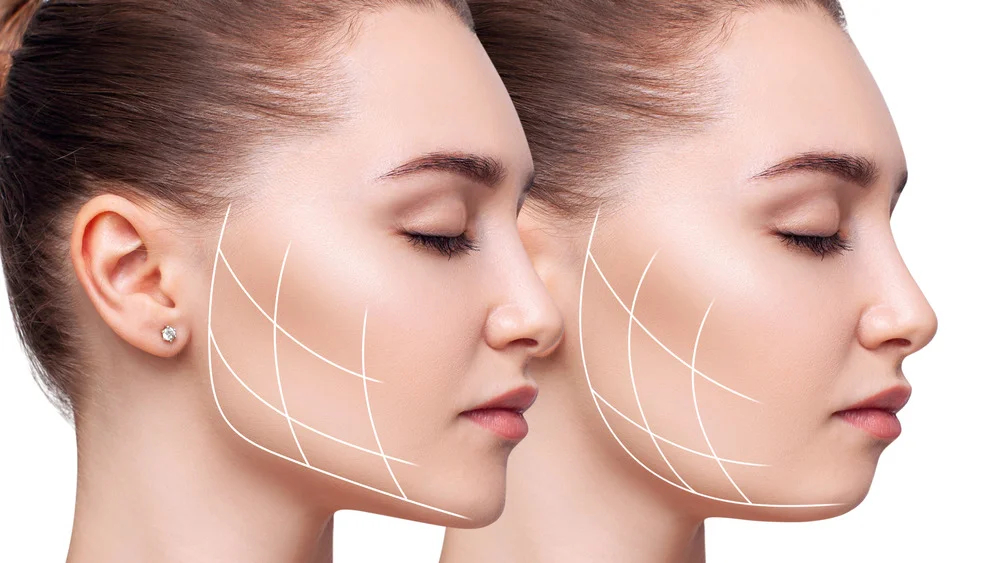
Facial ageing is substantially a volume problem. The deep fat compartments of the midface, temple and periorbital region atrophy, the overlying tissue descends, and the face develops the hollowed, shadowed appearance we read as tired.
Fat grafting addresses this with autologous tissue. Because it is your own, there is no allergy or rejection risk, and the grafted fat that survives is permanent. The trade-off is variability: typically 50 to 70 percent of the graft takes, so we slightly over-correct and occasionally recommend a second session.
Technique determines survival. We harvest at low negative pressure, avoid excessive centrifugation, and place fat in fine parcels through blunt cannulas in multiple planes — a large bolus in a single plane will not vascularise and will not survive.
Who this suits
- Hollowing of the temples, midface, tear troughs or perioral region.
- Sufficient donor fat, usually from the abdomen or inner thighs.
- A gaunt appearance following weight loss or over-aggressive earlier surgery.
- Patients wanting a permanent alternative to repeated filler.
- Stable weight — significant weight change after grafting will alter the result.
How the procedure is performed
- Mapping of deficient compartments and photographic documentation.
- Local anaesthesia at the donor site; gentle low-pressure harvest with a fine cannula.
- Processing to separate viable adipocytes from oil and tumescent fluid.
- Micro- and nano-fat preparation for superficial placement and skin quality improvement.
- Placement in fine parcels across multiple planes using blunt cannulas through 1mm entry points.
- Deliberate slight over-correction to account for expected resorption.
- Review at three months to assess take and plan a top-up session if indicated.
What it achieves
- Permanent volume restoration using your own tissue.
- No risk of allergic reaction or foreign-body response.
- Improvement in overlying skin quality from the regenerative cells in the graft.
- Simultaneous modest contouring at the donor site.
- Combines well with lifting procedures, which reposition but do not replace volume.
Recovery timeline
Individual recovery varies. These are the stages most patients pass through, and the ones we plan your follow-up around.
- Days 1–4
Facial swelling — often more than patients expect — and bruising at both graft and donor sites.
- Days 5–10
Swelling reducing. The face looks over-full at this stage; this is intentional and temporary.
- Weeks 2–4
Socially presentable. Donor site tenderness resolving.
- Months 2–3
Resorption complete; the surviving graft is now the result.
- Months 4–6
Final volume assessed and top-up planned if wanted.
Cost
Depends on number of areas grafted and volume required. Includes harvest, processing, placement and one review session.
Bands reflect the genuine variation in complexity between patients. Your firm quote is issued after examination and does not change afterwards. See our full price list for context across the catalogue.
Frequently asked questions
Typically 50 to 70 percent with careful technique. What survives at three months is permanent. We over-correct at the time of surgery to account for the loss.
Filler is predictable, adjustable and immediate, but temporary and expensive over time. Fat is permanent and improves skin quality, but less predictable and needs a recovery period. For large-volume restoration, fat is usually the better economics — and grafting is the one we perform.
Grafted fat behaves like the fat it came from, so significant weight change will change facial volume too. We ask patients to be at a stable weight before grafting.
In experienced hands, yes — but the periorbital region is unforgiving of over-filling and of injection technique. We use blunt cannulas and small volumes, and this region is where conservatism matters most.