About facelift
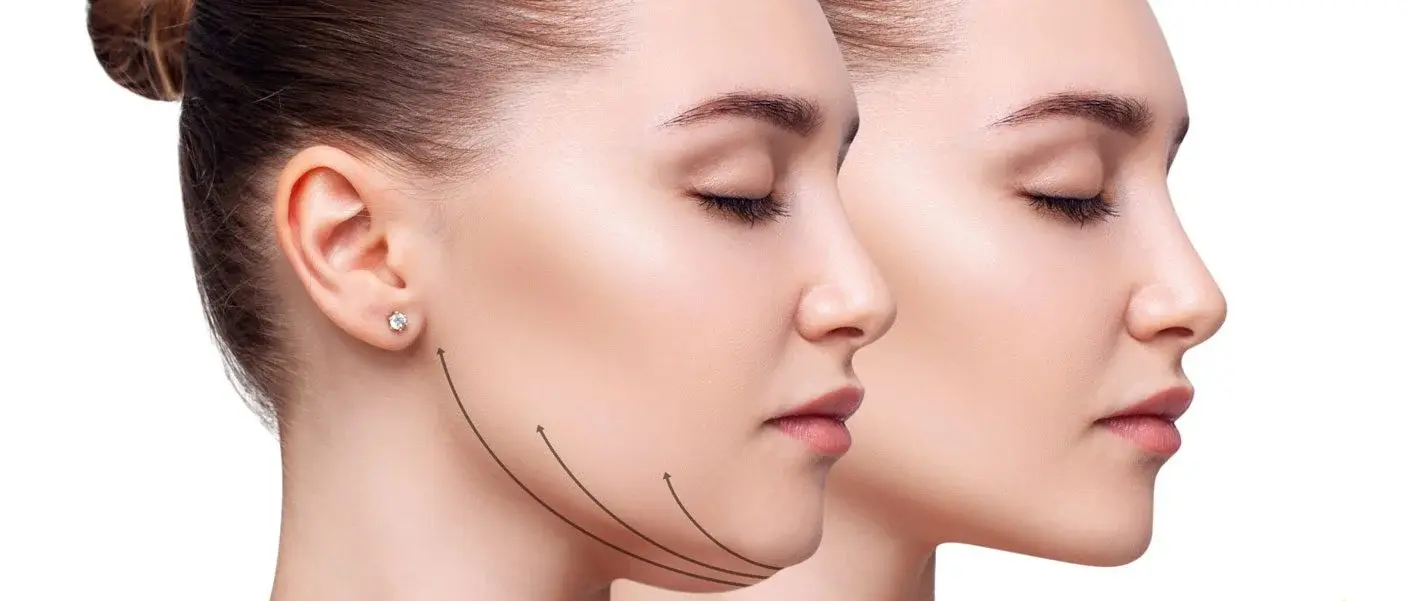
Facial ageing is a loss of volume and a descent of soft tissue, not simply an excess of skin. Operations that pull skin alone produce the tight, wind-swept appearance that gave facelifts their reputation, and they relapse quickly because skin is not a load-bearing structure.
We work in the deep plane or with extended SMAS techniques, releasing the retaining ligaments that tether the midface and repositioning the composite flap vertically. Skin is then redraped and trimmed without tension, which is what keeps scars fine and the result natural.
Volume is almost always part of the plan. Structural fat grafting to the midface, temple and jawline restores what has atrophied, and combining it with lifting produces a result neither achieves alone.
Who this suits
- Jowling, loss of jawline definition, or descent of the midface — typically from the mid-forties onward.
- Reasonable skin quality and elasticity.
- Non-smoker, or willing to stop completely for six weeks either side of surgery.
- Stable weight and well-controlled blood pressure.
- Understanding that a facelift addresses the lower two-thirds of the face — not the forehead, eyelids or skin texture.
How the procedure is performed
- Detailed analysis of ligament laxity, volume loss, skin quality and neck anatomy.
- Incisions designed around the ear — within the tragal margin and into the hairline — so they sit in natural shadow lines.
- Deep plane or extended SMAS dissection with release of the zygomatic and mandibular retaining ligaments.
- Vertical repositioning of the composite flap and fixation with permanent sutures.
- Concurrent neck work: platysmaplasty and submental liposuction where indicated.
- Structural fat grafting to restore midface, temple and perioral volume.
- Tension-free skin redraping and closure, with drains removed at 24–48 hours.
What it achieves
- Restored jawline and cervicomental angle.
- Midface volume returned to its original position.
- Natural movement retained — expression is not frozen or distorted.
- Scars concealed in the ear contour and hairline.
- Durable: most patients see a decade or more of benefit.
Recovery timeline
Individual recovery varies. These are the stages most patients pass through, and the ones we plan your follow-up around.
- Days 1–2
Overnight stay. Drains removed. Head elevated, cold compresses, soft diet.
- Days 5–7
Sutures begin to come out. Swelling and bruising at their most visible.
- Weeks 2–3
Most bruising resolved. Presentable for private settings; makeup can be worn from week two.
- Weeks 4–6
Return to work and light exercise. Numbness around the ears persists and is normal.
- Months 3–6
Swelling fully settled, scars fading, result clearly established.
- Month 12
Scars mature and pale. Final result.
Cost
Deep plane facelift with neck lift and fat grafting. Includes hospital stay, anaesthesia, garments and one year of follow-up.
Bands reflect the genuine variation in complexity between patients. Your firm quote is issued after examination and does not change afterwards. See our full price list for context across the catalogue.
Frequently asked questions
A deep plane facelift typically gives ten to fifteen years of benefit. It does not stop ageing — you continue to age from a better starting point than you would have otherwise.
Most patients are between 45 and 65. Earlier intervention on lighter laxity tends to give a more natural, longer-lasting result than waiting until changes are severe.
They are placed in the tragal margin, around the earlobe and into the hairline. Because we close without tension they usually fade to fine white lines that hairstyling covers completely.
Usually. The neck ages alongside the lower face, and lifting one without the other creates a mismatch. In practice we plan them as a single operation.
No. Threads can give a subtle lift lasting twelve to eighteen months and suit patients with early laxity, but they do not reposition deep tissue and cannot substitute for surgery where there is established jowling. We are a surgical practice and do not place threads — if that is what you need, we will say so and refer you.
Temporary numbness around the ears and cheeks is expected and resolves over three to six months. Permanent sensory change is rare, and injury to the facial nerve is rarer still.