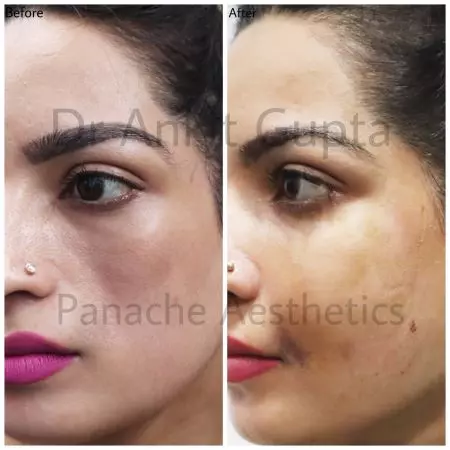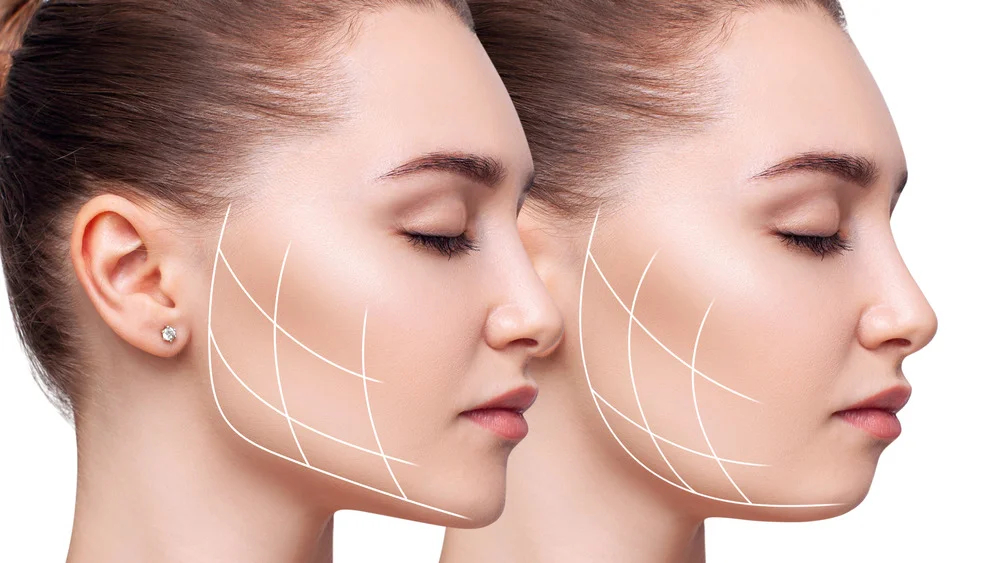
About buccal fat removal
The buccal fat pad sits deep in the cheek, below the zygomatic arch. In some faces it is genuinely prominent, producing lower-cheek fullness that persists regardless of body weight and blunts the shadow beneath the cheekbone.
Reduction is straightforward: a small incision inside the mouth, controlled delivery of the pad, partial excision. The difficulty is patient selection, not surgery. The pad provides volume that the face will need in later decades, and over-resection in a young, lean patient produces gauntness that only fat grafting can reverse.
We assess whether the fullness genuinely originates from the buccal pad rather than from masseter hypertrophy, superficial fat or overall body weight. Where it does not, we say so and recommend the treatment that will actually work.
Who this suits
- Genuine lower-cheek fullness with a normal or low body weight.
- A round or square lower face with poor definition beneath the cheekbone.
- Aged in the twenties to early forties, with good skin elasticity.
- Realistic expectations about the magnitude of change — it is subtle.
- Not suitable for those with an already thin face or significant facial volume loss.
How the procedure is performed
- Clinical assessment to confirm the buccal pad — not masseter bulk — is the cause.
- Photographic planning and, where useful, simulation of the projected change.
- A 1cm incision inside the cheek opposite the second upper molar.
- Gentle delivery of the buccal fat pad through the buccinator.
- Conservative, measured partial excision — never complete removal.
- Dissolving sutures placed intraorally; no external scar at all.
- Frequently combined with chin or jaw contouring for a fuller change in lower-face shape.
What it achieves
- Sharper definition below the cheekbone.
- Slimmer lower-face profile.
- No external incision or visible scar.
- Short procedure under local anaesthesia.
- Permanent — the excised pad does not regenerate.
Recovery timeline
Individual recovery varies. These are the stages most patients pass through, and the ones we plan your follow-up around.
- Days 1–3
Intraoral swelling and mild difficulty chewing. Liquid to soft diet. Salt-water rinses after meals.
- Days 4–7
Swelling subsiding. Soft diet continues. Back to work for most patients.
- Weeks 2–3
Normal diet resumed. Face still slightly swollen — often mistaken for no change yet.
- Months 2–3
Swelling fully resolved; contour change becomes apparent.
- Months 4–6
Final result.
Cost
Both sides, including theatre and anaesthesia. Commonly bundled with chin or jaw contouring at a combined rate.
Bands reflect the genuine variation in complexity between patients. Your firm quote is issued after examination and does not change afterwards. See our full price list for context across the catalogue.
Frequently asked questions
That is the principal risk, and it is why we are conservative and why we decline unsuitable candidates. Removing a measured portion rather than the whole pad substantially reduces it.
It is a refinement, not a transformation. If you are hoping for a dramatic change in face shape, chin or jaw contouring — or simply weight loss — will do more.
Not directly. If over-resection has occurred, facial fat grafting can restore volume, but that is a corrective operation rather than a true reversal.
Frequently, yes. Masseter hypertrophy responds to botulinum toxin rather than surgery, and confusing the two is the most common reason patients are disappointed after buccal fat removal elsewhere.