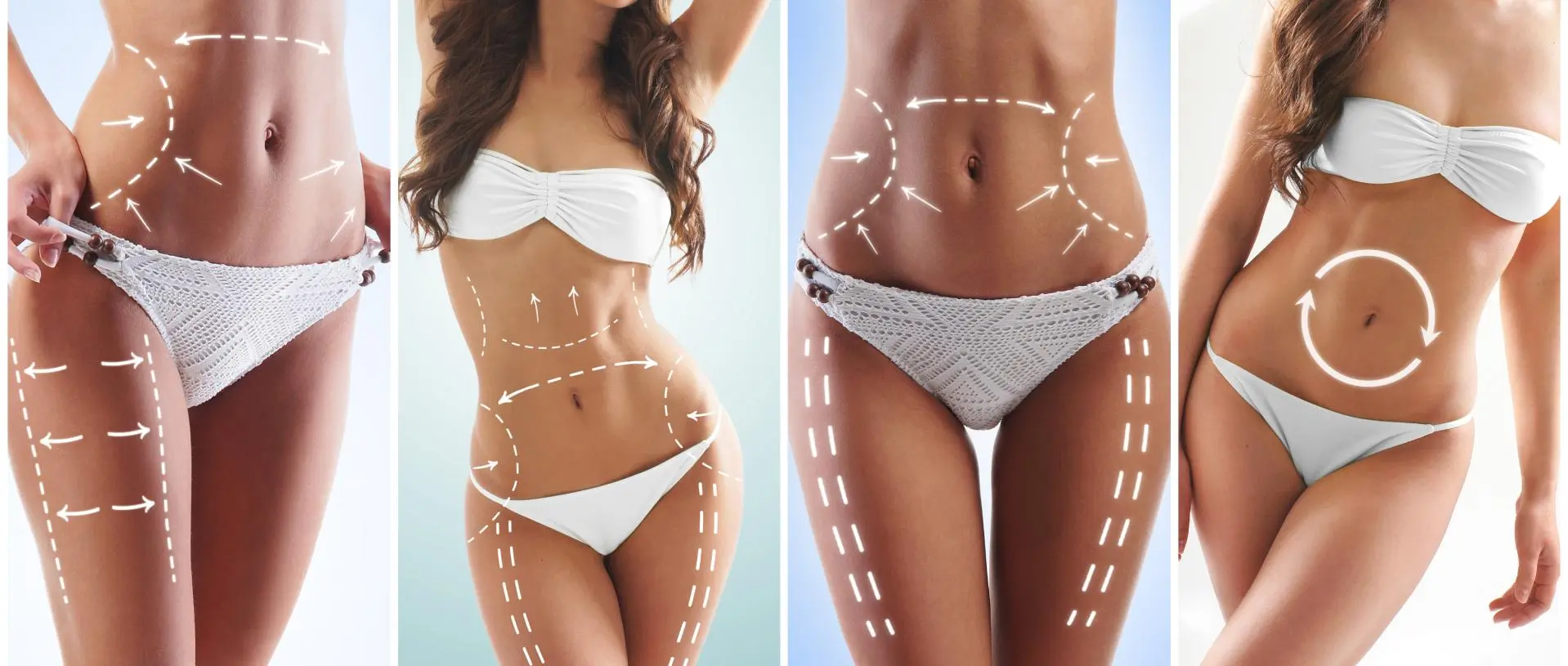
About tummy tuck
Pregnancy and major weight change stretch two structures: the skin envelope and the linea alba between the rectus muscles. Once the linea alba has stretched — rectus diastasis — no amount of core training will close it, and the abdomen bulges forward regardless of body fat.
Abdominoplasty addresses both. The separated muscles are plicated back to the midline with a permanent internal suture line, and the redundant skin below the umbilicus is excised. The result is a flatter, firmer abdomen with a restored waist.
Most of our cases are lipoabdominoplasty: liposuction of the flanks and upper abdomen combined with skin excision and muscle repair. This preserves the perforator blood supply while contouring the whole trunk rather than just the front.
Who this suits
- Loose abdominal skin after pregnancy or significant weight loss.
- Rectus diastasis — a palpable midline gap between the abdominal muscles.
- Stable weight for at least six months and close to your realistic target.
- Completed family; future pregnancy will undo the muscle repair.
- Non-smoker — this is one procedure where smoking dramatically increases wound complications.
How the procedure is performed
- Assessment of skin excess, diastasis width, fat distribution and scar position.
- Low transverse incision placed within the bikini line, hip to hip.
- Elevation of the abdominal flap with preservation of perforator vessels.
- Plication of the rectus sheath from xiphoid to pubis, closing the diastasis.
- Concurrent VASER liposuction of flanks and upper abdomen for a full waist result.
- Umbilicus repositioned through a new, natural-looking aperture.
- Excision of redundant skin, progressive tension sutures to reduce seroma risk, drains where indicated.
- Abdominal binder worn for six weeks.
What it achieves
- Flat abdomen with a restored waistline.
- Permanent repair of muscle separation and, often, improved core strength and back comfort.
- Removal of stretch-marked skin below the umbilicus.
- Improvement or resolution of some small umbilical hernias, repaired concurrently.
- Scar positioned to sit below underwear and swimwear lines.
Recovery timeline
Individual recovery varies. These are the stages most patients pass through, and the ones we plan your follow-up around.
- Days 1–3
One to two nights in hospital. Walking bent forward at the waist. Drains monitored. Binder worn continuously.
- Days 7–10
Drains removed. Standing upright becomes comfortable. Desk work possible from around day ten to fourteen.
- Weeks 2–4
Swelling settling. No lifting over 5kg. Short walks progressively lengthened.
- Weeks 6–8
Binder discontinued. Return to gym, avoiding direct core work until week eight.
- Months 3–6
Contour settled. Scar at its most pink; scar-care protocol in full effect.
- Months 12–18
Scar matures to a pale line. Final result.
Cost
Full lipoabdominoplasty with muscle repair. Mini tummy tuck from $2,100. Includes hospital stay, drains, binder, lymphatic massage and one year of follow-up.
Bands reflect the genuine variation in complexity between patients. Your firm quote is issued after examination and does not change afterwards. See our full price list for context across the catalogue.
Frequently asked questions
Liposuction removes fat and needs good skin elasticity. A tummy tuck removes skin and repairs muscle. If you have loose skin or diastasis, liposuction alone will disappoint you — and this is the single most important distinction we draw at consultation.
It runs hip to hip, low, and is designed to sit below your underwear line — bring a garment you wear so we can mark to it. It is a permanent scar and it is a genuine trade-off for the contour.
Those on the skin that is excised — generally below the umbilicus — go with it. Stretch marks above the umbilicus remain, though they are redistributed lower and often appear less obvious.
You can, but pregnancy will stretch the muscle repair and undo much of the result. We recommend completing your family first.
A smaller operation for patients with skin excess confined to below the umbilicus and no significant diastasis. Shorter scar, quicker recovery, but it corrects considerably less and is not suitable for most post-pregnancy abdomens.