About liposuction
Fat distribution is largely genetic. Flanks, outer thighs, the lower abdomen and the upper arms hold fat in patterns that persist at any body weight, which is why lean, well-trained patients still present with them.
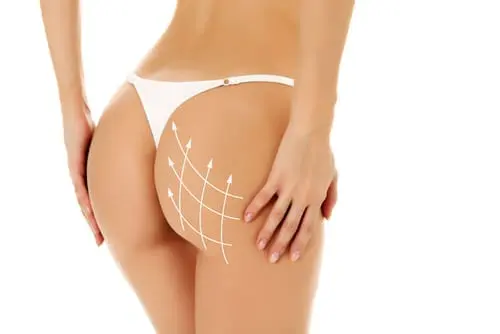
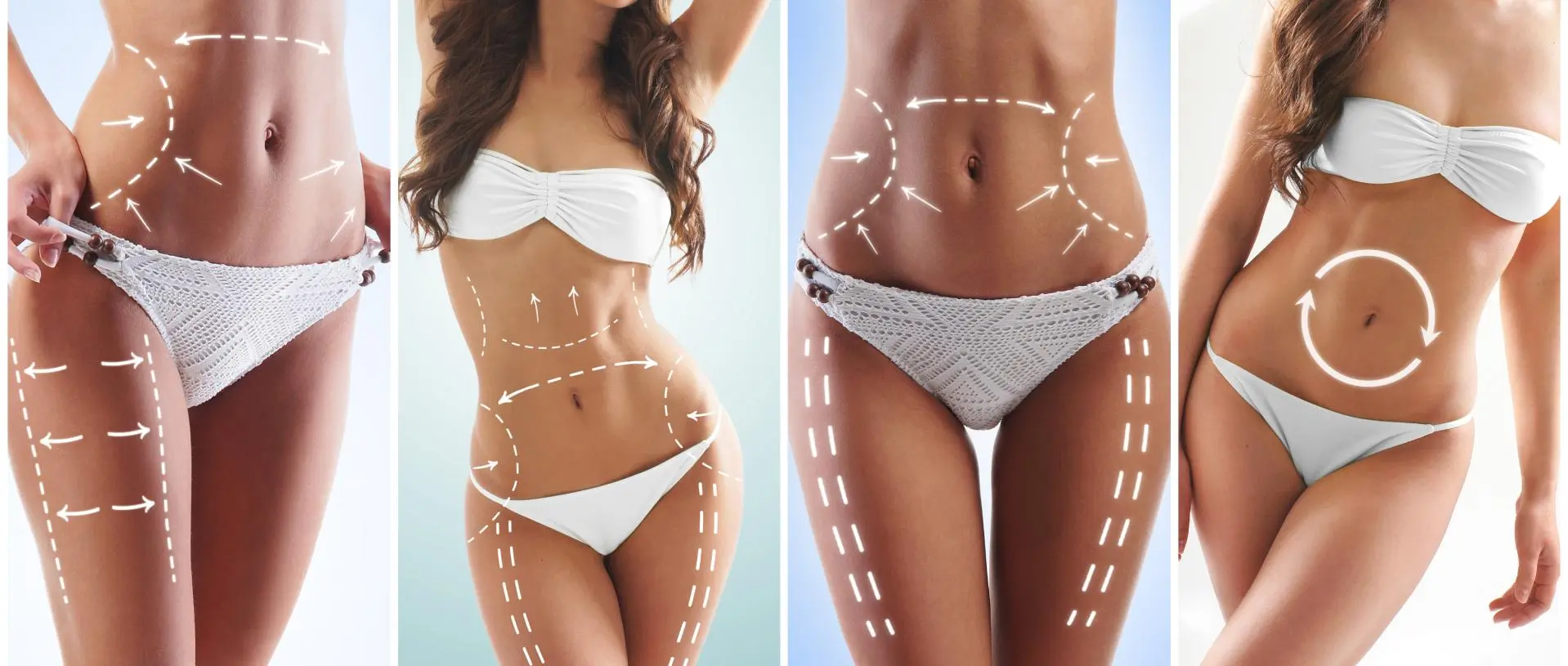
We work in 360 degrees rather than treating isolated pockets. Treating the abdomen without the flanks and back produces a contour that looks corrected from the front and untouched in profile. Circumferential treatment is what produces a silhouette that reads correctly from every angle.
VASER-assisted technique emulsifies fat with ultrasound before aspiration. This reduces trauma to surrounding tissue, allows treatment closer to the skin for definition work, and improves skin retraction — which matters most in patients whose elasticity is no longer perfect.
Who this suits
- Within about 30% of your target weight, with localised fat deposits.
- Good skin elasticity — liposuction removes fat, it does not tighten loose skin.
- Stable weight for at least six months.
- Non-smoker in good general health.
- Realistic expectations: this is contouring, and it is not a treatment for obesity.
How the procedure is performed
- Standing assessment and marking of fat compartments and natural anatomical shadows.
- Tumescent infiltration for anaesthesia, haemostasis and tissue preparation.
- VASER ultrasound emulsification of fat in the treated compartments.
- Aspiration through 3–4mm cannulas via incisions hidden in creases and the natural fold lines.
- Circumferential treatment of abdomen, flanks and back where a full silhouette change is the goal.
- Harvested fat purified and available for grafting to the buttocks or breasts in the same session.
- Compression garment applied on the table and worn for six weeks.
What it achieves
- Permanent removal of fat cells from the treated area.
- Silhouette reshaped in 360 degrees rather than in isolated patches.
- Better skin retraction than with traditional suction-only technique.
- Removed fat can be reused for buttock or breast augmentation.
- Small incisions placed in creases and largely inconspicuous.
Recovery timeline
Individual recovery varies. These are the stages most patients pass through, and the ones we plan your follow-up around.
- Days 1–3
Soreness comparable to heavy DOMS. Leakage of tumescent fluid from incisions is normal. Garment worn continuously.
- Days 5–7
Desk work resumed. Walking encouraged from day one to reduce clot risk.
- Weeks 2–4
Swelling and firmness peak then begin to settle. Lymphatic massage started.
- Weeks 4–6
Full exercise. Garment reduced then discontinued at six weeks.
- Months 3–6
Most swelling resolved and contour clearly visible.
- Months 6–12
Final result, particularly for skin retraction.
Cost
Priced by number of areas. Single area from $1,400; full 360° abdomen, flanks and back from $3,700. Includes VASER, garment, lymphatic massage sessions and follow-up.
Bands reflect the genuine variation in complexity between patients. Your firm quote is issued after examination and does not change afterwards. See our full price list for context across the catalogue.
Frequently asked questions
The fat cells removed do not return. If you gain significant weight afterwards, the remaining cells throughout your body enlarge — so the treated area stays proportionally better but the overall silhouette changes.
Around five litres in a single session is the accepted safe upper limit for an outpatient procedure. Larger volumes materially increase risk and are better staged.
It depends on your starting elasticity. VASER improves retraction considerably, but where laxity is already established a skin-excision procedure such as a tummy tuck gives a far better result.
No. Most patients lose only two to four kilograms. It changes shape, not the number on the scale, and it will not treat obesity or its metabolic consequences.
It controls swelling, helps the skin redrape onto the new contour and reduces fluid collection. Poor compliance in the first six weeks is one of the more common causes of an irregular final result.