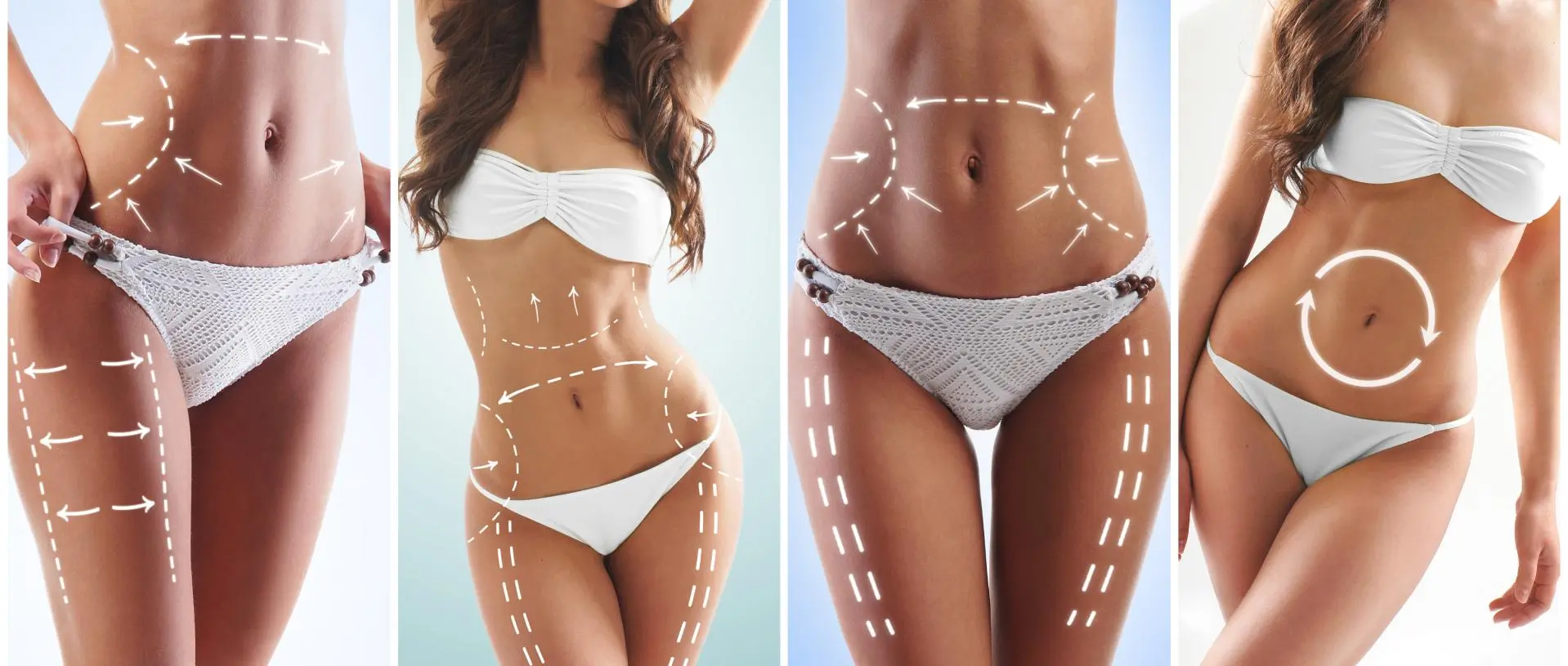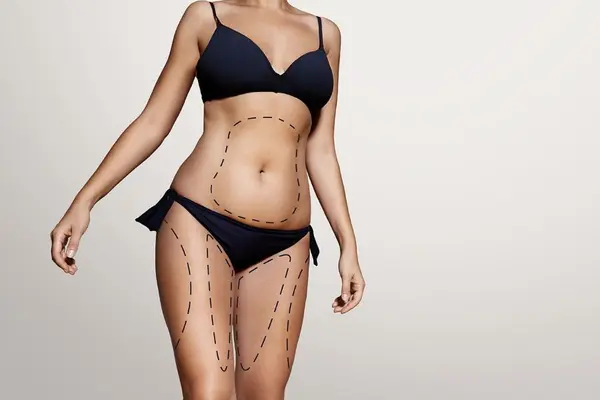
About thigh lift
Inner thigh skin is thin and poorly supported, which makes it one of the first areas to sag after weight loss and one of the least responsive to exercise. The functional complaint — chafing, skin irritation, difficulty with clothing — is often as pressing as the aesthetic one.
Technique depends on where the laxity sits. Vertical excess confined to the upper thigh is treated with a medial thigh lift, scarred in the groin crease. Laxity extending down the leg needs a vertical thighplasty, with a scar running down the inner thigh — a bigger scar for a considerably bigger correction.
Fixation is what determines durability. Anchoring the deep tissue to Colles fascia rather than relying on skin tension prevents the downward migration and vulvar distortion that were common with older techniques.
Who this suits
- Loose inner or outer thigh skin, typically after significant weight loss.
- Chafing, skin irritation or recurrent intertrigo between the thighs.
- Stable weight for at least six months, ideally twelve after bariatric surgery.
- Non-smoker with no untreated lymphoedema or venous insufficiency.
- Acceptance of a scar in the groin crease and, in vertical thighplasty, down the inner thigh.
How the procedure is performed
- Standing assessment of the direction and extent of laxity.
- VASER liposuction to debulk the thigh while preserving lymphatic channels.
- Medial thigh lift with the incision hidden in the groin crease for upper-thigh laxity.
- Vertical thighplasty extending down the inner thigh where laxity is more extensive.
- Anchoring of the deep fascial layer to Colles fascia to prevent scar migration and distortion.
- Meticulous lymphatic preservation to reduce seroma and swelling.
- Compression garments worn for six to eight weeks.
What it achieves
- Firmer, better contoured thighs with the excess removed.
- Resolution of chafing and the recurrent skin irritation it causes.
- Improved comfort walking and exercising.
- Fascial anchoring for a stable, non-migrating scar.
- Fits naturally into a staged post-weight-loss body contouring plan.
Recovery timeline
Individual recovery varies. These are the stages most patients pass through, and the ones we plan your follow-up around.
- Days 1–4
Compression garment continuous. Movement deliberately limited. Drains commonly used.
- Days 7–14
Drains removed. Walking increasing gradually. Desk work toward the end of this period.
- Weeks 3–4
Swelling settling. Sitting for extended periods becomes comfortable.
- Weeks 6–8
Garment discontinued. Return to full exercise.
- Months 3–6
Contour settled; scars pink and maturing.
- Months 12–18
Final result with mature scars.
Cost
Medial thigh lift at the lower end; vertical thighplasty at the upper. Includes VASER, drains, garments and one year of follow-up.
Bands reflect the genuine variation in complexity between patients. Your firm quote is issued after examination and does not change afterwards. See our full price list for context across the catalogue.
Frequently asked questions
A medial lift scars in the groin crease, which underwear covers. A vertical thighplasty adds a scar running down the inner thigh, visible in shorts or swimwear. The choice is driven by how far down the laxity extends.
Generally yes. The groin is a mobile, moist area under constant tension from walking and sitting, so wound healing issues are more common here than elsewhere. We are explicit about this in advance.
If your skin quality is genuinely good and the issue is volume, yes. After major weight loss it rarely is.
Twelve to eighteen months, and at a stable weight for at least six of those. Operating while weight is still falling means operating on a target that is still moving.