About gfc therapy
Standard PRP injects intact platelets that then release growth factors gradually in the tissue. GFC processing activates the platelets in vitro first and separates the released growth factor concentrate from the cellular debris, so what is injected is the active signalling fraction itself.
The practical differences are higher concentration of the relevant growth factors, absence of red and white cells that contribute to post-injection inflammation and discomfort, and a more consistent preparation between sessions — which addresses one of the criticisms of PRP research, where preparation variability confounds results.
Clinically it is used for the same indications as PRP: androgenetic alopecia, diffuse thinning, telogen effluvium and support around a hair transplant. Patients generally report less discomfort during and after injection, and sessions are usually spaced slightly further apart.
Who this suits
- Early to moderate androgenetic alopecia in men or women.
- Diffuse thinning, telogen effluvium or post-partum hair loss.
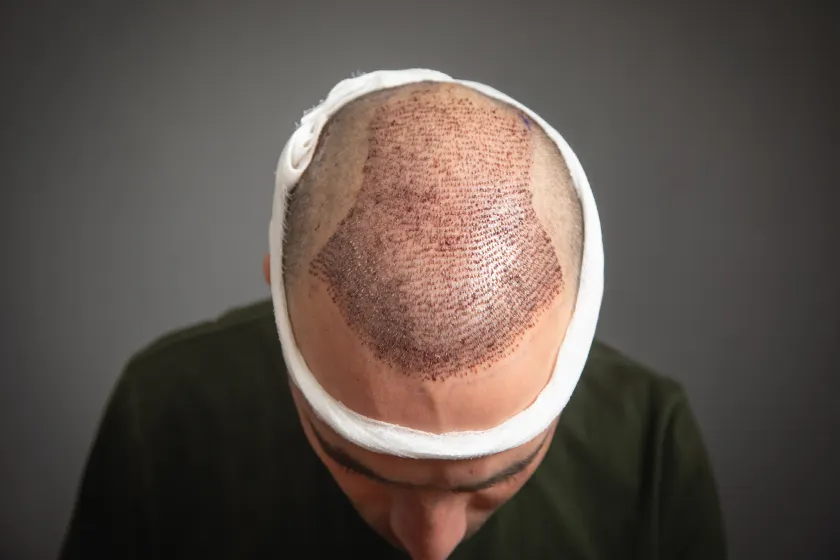
- Support before and after a hair transplant to improve graft survival.
- Patients who found standard PRP uncomfortable or inconsistent.
- Not suitable with platelet disorders, active infection, anticoagulant therapy or blood-borne infection.
How the procedure is performed
- Trichoscopy, hair-pull test and photographic documentation.
- Blood investigations to exclude thyroid disease, iron and vitamin D deficiency.
- Venous blood draw into a closed GFC preparation kit.
- Controlled platelet activation to release growth factors in vitro.
- Centrifugation to separate the pure growth factor concentrate from cellular debris.
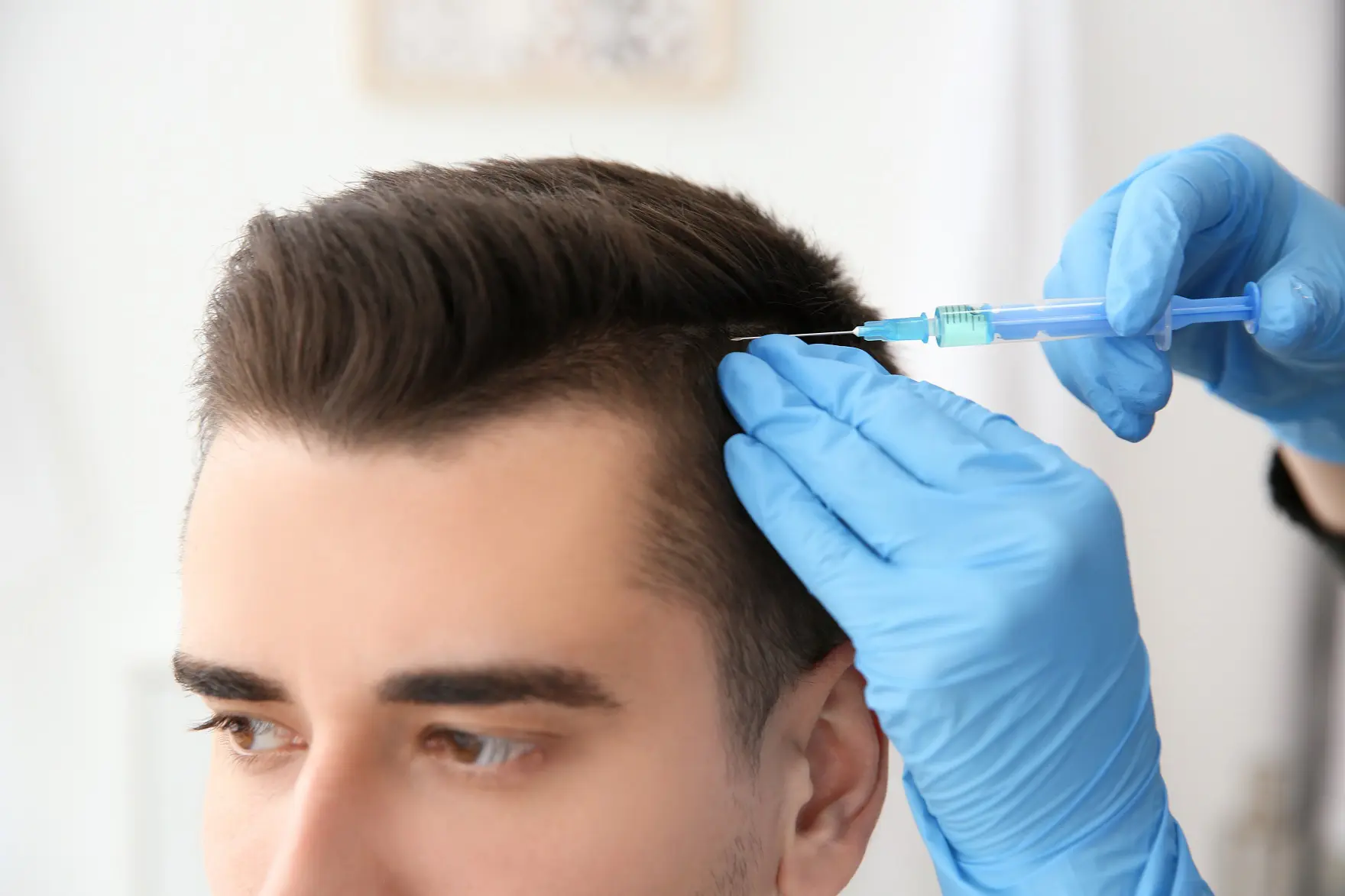
- Topical anaesthetic or ring block, then injection in a defined scalp grid.
- A course of four sessions at monthly intervals, then maintenance every six months.
What it achieves
- Higher growth factor concentration than conventional PRP.
- Free of red and white cells, so less post-injection inflammation.
- More consistent preparation between sessions.
- Notably better tolerated than standard PRP by most patients.
- Autologous — no allergy or rejection risk.
Recovery timeline
Individual recovery varies. These are the stages most patients pass through, and the ones we plan your follow-up around.
- Immediately after
Mild scalp tenderness, generally less than with standard PRP. No hair washing for 24 hours.
- Days 1–2
Tenderness resolved. Avoid exercise, heat and alcohol for 48 hours.
- Weeks 2–4
Reduction in shedding, usually the first sign of response.
- Months 3–4
Increased calibre and density visible on trichoscopy and comparison photographs.
- Months 6+
Peak benefit from the course; maintenance sessions begin.
Cost
Per session. Courses of four sessions priced as a package. Blood investigations quoted separately.
Bands reflect the genuine variation in complexity between patients. Your firm quote is issued after examination and does not change afterwards. See our full price list for context across the catalogue.
Frequently asked questions
It is more concentrated, purer and more consistent, and patients tolerate it better. Whether that translates to a significantly better hair outcome is not yet settled by high-quality comparative trials, and we will not claim more than the evidence supports.
Four monthly sessions initially, then maintenance every six months. Androgenetic alopecia is progressive, so ongoing treatment is needed to hold the gains.
Yes, and it is a common combination. Given before and after surgery it supports graft survival and helps protect the native hair around the transplanted area.
No. Like PRP, it thickens existing miniaturised hair and slows loss. Follicles that have already scarred over will not respond, and a transplant is the appropriate treatment there.